
Siren goes off at 7 pm every night in a small Maharashtra village

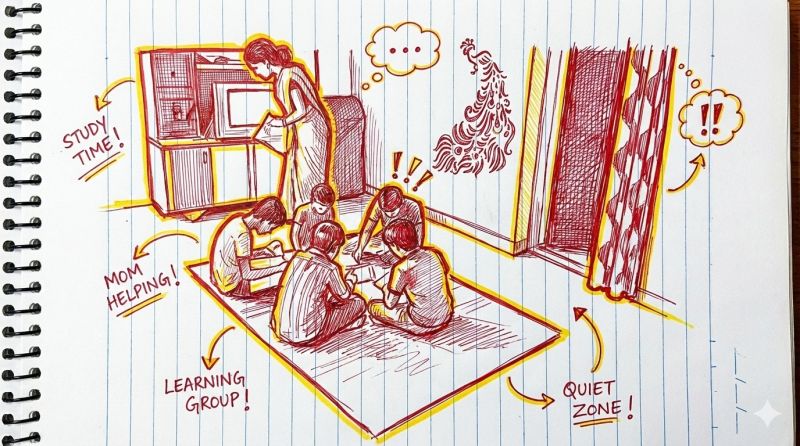
A siren goes off at 7 pm every night in a small Maharashtra village.
And for the next 90 minutes, an entire community goes dark.
This is Mohityanche Vadgaon in Sangli district – a village that decided in 2021 to solve screen addiction the way no country has managed to: together.
Every evening at 7 pm, the siren sounds from the Bhairavnath temple. Devices go off. Children study. Families talk. Kids play outdoors. Books get read. By 8:30 pm, a second siren signals the end, and screens come back on.
This has been happening every single day for nearly five years.
Sarpanch Vijay Namdeo Mohite said the problem became impossible to ignore during COVID. Online education made screens unavoidable, but dependence turned into addiction.
Mental health suffered. Physical health declined. Academic performance dropped. Children stopped reading. Outdoor play disappeared.
“Televisions would be on while children tried to study. It disturbed concentration and reduced family interaction,” Mohite said. “This was never about opposing technology. We only wanted to limit excessive use.”
The resistance was fierce at first. Parents argued that TVs and phones are personal property. Even adults were addicted to screens, Mohite admitted.
So the village formed monitoring teams – retired teachers, ASHA workers, anganwadi workers, who went door to door explaining the initiative. A ₹500 fine was imposed on repeat violators.
But the real turning point? Women.
Special Mahila Gram Sabhas convinced mothers to support the idea. “Once mothers supported it, implementation became much easier,” Mohite said.
Within six months, the results were undeniable:
→ Academic performance improved across the board
→ Social behavior shifted, youngsters stopped spending hours watching reels or playing PUBG at the chowk
→ Family conversations returned
→ Children started eating without screens in front of them
Today, the system runs on autopilot. The siren sounds. Devices go off. No reminders needed.
“If someone breaks the rule, family members themselves inform me,” Mohite said.
Villages in Sangli, Kolhapur, and even Halaga village in Karnataka have adopted the model. Vandana Mohite, a mother in the village, said the change at home is striking.
“Earlier, my children would not eat or study without screens. Now the atmosphere is completely different.”
Cyber expert Mukta Chaitanya calls this a red alarm issue. “People are attached to screens constantly except while sleeping. Average screen time in India is seven to eight hours daily and actual usage may be higher.”
One village proved that collective action works where individual willpower fails.
Mohite believes this should be replicated everywhere. “Society truly needs it today,” he said.
Could your community commit to 90 minutes of screen-free time daily or would the resistance be too strong?